
We Care by Mojaz Academy
كل الأنماطAll patterns

بروفايل النمط

المتجمّد قبل الامتحان

The Exam Freezer

فاهم ودارس، بس القلق بيسكّر الباب لحظة ما بده يطلّع المعلومة.

شوف الخطة
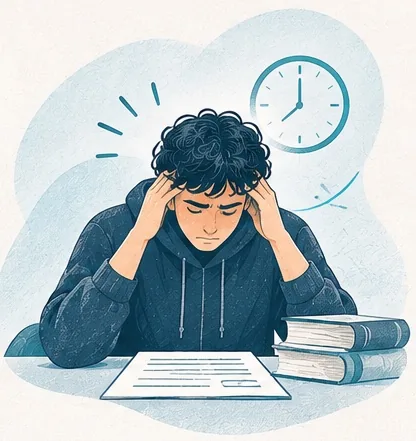
كيف بيظهر هالنمط؟

بيفكّر

"شو رح يصير إذا رسبت؟"، "شو رح يقولوا أهلي؟"، "عقلي رح يفضى".

بيحس

قلبه بيدق، معدته بتقلب، رجفة، وفراغ مفاجئ بالذاكرة.

بيتصرّف

ما بينام ليلة الامتحان، بيعيد قراءة نفس السؤال، وبيتذكر الجواب بعد ما يطلع من القاعة.

أهم الخصائص

  • المحرّك: أفكار القلق بتاخد من مساحة الذاكرة اللي محتاجها ليحل.
  • الأبعاد اللي بيقيسها الكويز: القلق الفكري (Worry)، التوتر الجسدي (Emotionality)، وتشويش الأداء.
  • نقطة القوة المخفية: فهم حقيقي للمادة، وغالباً بيشرح لغيره أحسن ما بيكتب بالامتحان.
  • وقت الذروة: الامتحانات الكبيرة، والـ OSCE، وامتحانات المزاولة.
  • علاقته بالأنماط التانية: "دائرة القلق": قلق، ثم علامة أقل، ثم قلق أكبر. ودراسة الدمام ربطت المعدل الأقل بقلق أعلى.

أكبر التحديات

  • العلامة ما بتعكس فهمه، وهاد بيحبطه.
  • بيصير يخاف من أي تقييم، حتى الكويزات الصغيرة.
  • بيحاول يهدّي حاله بالقوة، وما بتزبط.
  • الأعراض الجسدية بتقنعه إنه رح يفشل.

الخطة الاستراتيجية

  1. هالأسبوع

    يجهّز يوم الامتحان

    روتين ثابت لليلة الامتحان وصبحيته مع نوم كافي، وقبل الامتحان بعشر دقايق يكتب كل أفكاره المقلقة على ورقة. تجربة Ramirez و Beilock بمجلة Science سنة 2011 لقت إن الكتابة عن القلق قبل الامتحان حسّنت العلامات، وخصوصاً عند الطلاب اللي قلقهم عالي.

  2. أول شهر

    يتعوّد على الضغط

    يمتحن حاله بأسئلة وتايمر بدل ما يعيد القراءة، ومحطات OSCE تجريبية. بدراسة Agarwal وزملائه 2014 على طلاب مدارس، أغلب الطلاب قالوا إن تمرين الاسترجاع خلّاهم أقل توتر من الامتحانات.

  3. الفصل كامل

    يغيّر تفسير جسمه

    لما قلبه يدق، يقول لحاله "هاي طاقة بتساعدني أركّز". تجربة Jamieson وزملائه 2010 لقت إن الطلاب اللي تعلموا يشوفوا التوتر كطاقة مفيدة جابوا علامات أعلى بقسم الرياضيات بامتحان GRE. ومعها خطة جوا القاعة: الأسهل أول، والسؤال اللي سكّر عليه بيتركه وبيرجعله.

دور اللي حواليه

لا تسأله "قديش جبت؟" أول شي. اسأله "كيف حسيت جوا؟".

متى بيحتاج يحكي مع مختص؟

إذا صار عنده نوبات هلع، أو صار يغيب عن الامتحانات، أو القلق امتد لبرا الامتحانات.

Pattern profile

The Exam Freezer

المتجمّد قبل الامتحان

They understand and have studied, but anxiety shuts the door the moment they need to recall the information.

See the plan

How does this pattern show up?

Thinks

“What if I fail?” “What will my parents say?” “My mind will go blank.”

Feels

A racing heart, an upset stomach, shaking, and a sudden blank in memory.

Does

Doesn't sleep the night before the exam, rereads the same question, and remembers the answer after leaving the hall.

Key characteristics

  • The driver: worrying thoughts take up the working memory they need to solve the question.
  • What the quiz measures: cognitive worry (Worry), physical tension (Emotionality), and disrupted performance.
  • Hidden strength: real understanding of the material; they often explain it to others better than they write it in the exam.
  • Peak time: major exams, OSCEs, and licensing exams.
  • Link to other patterns: the “anxiety loop”: anxiety, then a lower grade, then more anxiety. A Dammam study linked lower GPA with higher anxiety.

Biggest challenges

  • The grade doesn't reflect their understanding, which is discouraging.
  • Starts to fear any assessment, even small quizzes.
  • Tries to force themselves to calm down, and it doesn't work.
  • The physical symptoms convince them they are going to fail.

Strategic plan

  1. This week

    Prepare for exam day

    A fixed routine for the night and morning before the exam with enough sleep, and ten minutes before the exam, writing all their worries on paper. Ramirez and Beilock's 2011 experiment in Science found that writing about worries before an exam improved scores, especially for highly anxious students.

  2. First month

    Get used to the pressure

    Self-testing with questions and a timer instead of rereading, and mock OSCE stations. In a 2014 study of school students by Agarwal and colleagues, most students said retrieval practice made them less nervous about exams.

  3. Whole semester

    Reinterpret the body

    When the heart races, say “this is energy that helps me focus.” Jamieson and colleagues' 2010 experiment found that students taught to see stress as useful energy scored higher on the GRE math section. Plus a plan inside the hall: easiest first, and skip a question that blocks them, then come back to it.

How people around them can help

Don't ask “what did you get?” first. Ask “how did it feel in there?”

When to talk to a professional

If they have panic attacks, start missing exams, or the anxiety spreads beyond exams.

بدك تعرف نمطك؟Want to find your pattern?

التقييم مجاني وبياخد حوالي ٧ دقائق، وبآخره بتطلعلك خطتك الشخصية.The assessment is free and takes about seven minutes. Your personal plan appears at the end.

ابدأ التقييم المجانيStart the free assessment
مصادر الاستراتيجياتSources for the strategies
  • Gollwitzer & Sheeran (2006) Implementation intentions and goal achievement: a meta-analysis
  • Wohl, Pychyl & Bennett (2010) I forgive myself, now I can study, Personality and Individual Differences
  • Ramirez & Beilock (2011) Writing about testing worries boosts exam performance in the classroom, Science
  • Agarwal et al. (2014) Classroom-based programs of retrieval practice reduce middle school and high school students' test anxiety
  • Jamieson et al. (2010) Reappraising arousal improves performance on the GRE, J Exp Soc Psychol